



AN APPROACH BUILT FROM REAL-WORLD EXPERIENCE
Before supporting athletes, business leaders, artists and professionals, I had already worked in environments where pressure, uncertainty and decision-making were part of everyday life.
Whatever the context, certain mechanisms tend to emerge when pressure increases…
AN APPROACH BUILT FROM REAL-WORLD EXPERIENCE
FLUENCE WASN’T BORN IN AN OFFICE.
It was shaped in environments where I had to:
Perform under pressure
Make important decisions
Manage uncertainty
Remain effective despite fatigue


WHAT REAL-WORLD EXPERIENCE TAUGHT ME
01 PERFORMING UNDER PRESSURE IN COMPETITION OR EMERGENCY SITUATIONS
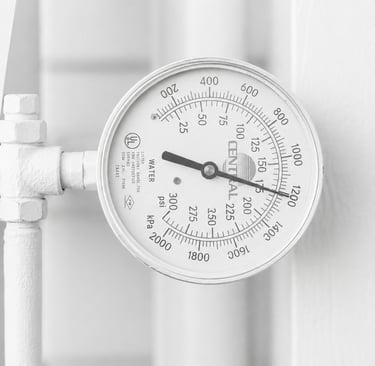
Under pressure, the way we function changes: our minds speed up, automatic responses become less reliable, mental recovery decreases, attention becomes more scattered, and certain emotions can take over at the wrong moment.
We can then find ourselves operating with an internal system saturated by pressure to achieve results, fear of failure, fear of injury or overcontrol.
THE REAL WORK: REGAINING STABILITY, PRESENCE, FLUIDITY, RECOVERY AND CLARITY DESPITE THE STAKES
WHAT REAL-WORLD EXPERIENCE TAUGHT ME
01 PERFORMING UNDER PRESSURE IN COMPETITION OR EMERGENCY SITUATIONS
the mind speeds up,
automatic responses become less reliable,
mental recovery decreases,
attention becomes more scattered,
emotions take over.
PRESERVING HOW YOU FUNCTION THEN BECOMES MORE IMPORTANT THAN TRYING TO MOTIVATE YOURSELF.
02 MENTAL FATIGUE & ADAPTATION IN DEMANDING ENVIRONMENTS
In unstable environments, the brain can quickly learn to function in a state of constant tension. At first, this may look like adaptation. Over time, however, it can develop into hypervigilance, emotional fatigue, difficulty recovering, loss of perspective and cognitive overload.
THE PROBLEM IS NOT ALWAYS THE INTENSITY OF AN EVENT. IT IS OFTEN THE PROLONGED ACCUMULATION OF PRESSURE WITHOUT GENUINE RECOVERY.


02 MENTAL FATIGUE & ADAPTATION IN DEMANDING ENVIRONMENTS
hypervigilance,
emotional fatigue,
difficulty recovering,
loss of perspective,
cognitive overload.
THE PROBLEM ISN’T ALWAYS THE INTENSITY OF AN EVENT. IT IS OFTEN THE PROLONGED ACCUMULATION OF PRESSURE WITHOUT GENUINE RECOVERY.

03 COLLECTIVE COHESION & TEAM FUNCTIONING
A team rarely becomes disorganised suddenly. Deterioration often begins with subtle signs: less fluid communication, more emotional reactions, less mental recovery and greater cognitive fatigue. Silent tensions begin to build.
Under pressure or over the long term, some teams gradually start operating reactively, losing clarity and reducing coordination and cohesion.
THE WORK: RESTORE COHESION, COLLECTIVE CLARITY, EMOTIONAL STABILITY AND COORDINATION — SO THAT THE TEAM CAN FUNCTION SUSTAINABLY DESPITE PRESSURE AND HIGH STAKES.


03 COLLECTIVE COHESION & TEAM FUNCTIONING
less fluid communication,
more emotional reactions,
less mental recovery,
greater cognitive fatigue,
silent tensions begin to build.
UNDER PRESSURE OR OVER THE LONG TERM, SOME TEAMS GRADUALLY BEGIN TO OPERATE REACTIVELY, LOSE CLARITY, AND EXPERIENCE REDUCED COORDINATION AND COHESION.
04 DIFFERENT CONTEXTS, DIFFERENT PROFILES, SIMILAR MECHANISMS
“After your mistake, you were out of the game.”
“You overthink before acting.”
“As soon as the pressure rises, you lose your ability to perform.”
“Why did you tilt again?”
“We can see that you panic under pressure.”
“You’ve looked tired for the past few weeks.”
“You never really stop thinking about work.”
“You freeze as soon as people are watching you.”
“You doubt everything before going on stage.”
“You know your course material… but you freeze on the day.”
“Stress makes you lose your ability to perform.”
“You’re surviving more than you’re living.”
“You remain on alert even after your shift.”
Different profiles, different difficulties — but often the same underlying mechanisms.
UNDERSTANDING THESE MECHANISMS MAKES IT POSSIBLE TO IDENTIFY WHAT INFLUENCES THE WAY YOU FUNCTION AND ACT ON WHAT CAN EVOLVE.


04 DIFFERENT CONTEXTS, DIFFERENT PROFILES, BUT SIMILAR MECHANISMS
“After your mistake, you were out of the game.”
“You overthink before acting.”
“As soon as the pressure rises, you lose your ability to perform.”
“Why did you tilt again?”
“We can see that you panic under pressure.”
“You’ve looked tired for the past few weeks.”
“You never really stop thinking about work.”
“You freeze as soon as people are watching you.”
“You doubt everything before going on stage.”
“You know your course material… but you freeze on the day.”
“Stress makes you lose your ability to perform.”
“You’re surviving more than you’re living.”
“You remain on alert even after your shift.”
Different profiles, different difficulties — but often the same underlying mechanisms.
UNDERSTANDING THESE MECHANISMS MAKES IT POSSIBLE TO IDENTIFY WHAT INFLUENCES THE WAY YOU FUNCTION AND ACT ON WHAT CAN EVOLVE.

MY EXPERIENCE
My career is built on a rich mix of experiences. My fifteen years of involvement with Doctors Without Borders taught me one essential thing: the mind is an extraordinary resource, and when we know how to use it, what we can achieve expands considerably.
My experience in a senior management role within a large international organisation also gave me a deeper understanding of the role of mental functioning in team management and organisational change.
You may wonder how I can support such a wide range of profiles.
The answer lies in my unusual career path: I have been a musician, a humanitarian worker and a senior manager. I have managed critical crises. I am a sportsman and I coach female footballers.
This breadth of experience allows me to understand your needs from different perspectives.










Crisis management: navigate the storm
The 7 tools of coaching
Mental preparation
Winning Identity
Sports psychology
MSc Operations & Supply Chain management
MY QUALIFICATIONS
WHY I WORK WITH SUCH A WIDE RANGE OF PEOPLE
Because my career has taken me through several demanding environments: sport, music, humanitarian work, crisis management, leadership and coaching.
This breadth of experience allows me to understand the specific challenges of each situation more quickly.
My career has been shaped by a rich mix of experiences. Fifteen years working with Médecins Sans Frontières taught me one essential thing: the mind is an extraordinary resource, and when we learn how to use it effectively, what we are capable of expands considerably.
My experience in a senior management role within a large international organisation also gave me a deeper understanding of the role mental functioning plays in team management and organisational change.
You may wonder how I can support such a wide range of people.
The answer lies in my unusual career path: I have been a musician, a humanitarian worker and a senior manager. I have managed critical crises. I am a sportsman and I coach women’s football.
This breadth of experience allows me to understand your needs from different perspectives.
MY QUALIFICATIONS


“ A clear method, tangible results: I learned how to manage my stress and perform with greater calm! ”
Jean-Baptiste, Tennis player


“I feel calmer and more focused in my studies and sporting activities. The sessions really made a difference!”
Noam, Secondary School Student

“ A clear method, tangible results: I learned how to manage my stress and perform with greater calm! ”
Jean-Baptiste, Tennis player
“I feel calmer and more focused in my studies and sporting activities. The sessions really made a difference!”
Noam, Secondary school student
FLUENCE™ &
FLUENCE CREW™
contact@confianceetperformance.eu
© 2024 All rights reserved

